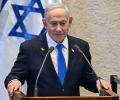
Israeli Prime Minister Benjamin Netanyahu asserts that the joint US-Israel campaign against Iran is progressing successfully, highlighting Israel's strengthened position and hinting at new regional alliances.

The BSE Sensex and the Nifty 50 declined around 4.5 per cent each since the start of the West Asia conflict.

Kerala Chief Minister Pinarayi Vijayan has strongly refuted Rahul Gandhi's claims of collusion between the LDF and BJP in the upcoming Kerala Assembly elections, accusing the Congress leader and his party of being the BJP's 'B-team'. The Congress has retaliated, alleging that Vijayan is trying to appease Prime Minister Modi and Home Minister Shah.

Sri Lanka is deliberating appropriate action after a second Iranian ship sought entry to its territorial waters, following an attack on an Iranian frigate near the island nation. The government is focused on safeguarding lives and regional peace.

The Indian embassy in Saudi Arabia has confirmed that one Indian national was injured in a projectile incident in Al Kharj, while clarifying that there were no Indian fatalities. The embassy is providing assistance and is in contact with Saudi authorities.

Prime Minister Benjamin Netanyahu stated that Israel and the US struck Iran because Tehran had restarted its nuclear programme and it would have gone 'immune within months'. He claimed Iran was building new underground sites to shield its missile and nuclear programmes from attacks.

World No. 4 Coco Gauff expresses concern over civilian casualties amid the Iran conflict, as the crisis disrupts tennis events in the Middle East and strands players in Dubai.

'Travellers are considering safer and more stable destinations.'

External Affairs Minister S Jaishankar affirms India's self-determined and 'unstoppable' rise, emphasising the nation's strategic growth and role in the Indian Ocean region amid evolving global dynamics.

Prime Minister Narendra Modi addressed an NDA rally, assuring that the Indian government is providing assistance to Indian citizens stranded in West Asia due to the ongoing conflict. He criticised the Congress party for allegedly making provocative statements and spreading rumours regarding the crisis.

We know in our heart that speaking the truth on this stupid Iran war will anger Trump and so we look the other way because if we look him in the eye the bully will straighten us out, asserts Aakar Patel.
Kerala Chief Minister Pinarayi Vijayan held an online meeting with Loka Kerala Sabha members in the Gulf region to discuss support for the expatriate community amidst the escalating conflict in West Asia.

This threat comes as the assembly of experts in Iran has reportedly reached a majority consensus regarding the successor to the late Supreme Leader Ayatollah Ali Khamenei, according to the Tehran-based Mehr News Agency (MNA).
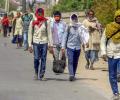
The family of an Odisha migrant worker who died in Qatar is appealing to the government for assistance in bringing his body home. The 25-year-old was the sole earner for his family.

Baghaei also alleged that recent unrest in Iran was fuelled by foreign interference, claiming riots were triggered by "very evident" interventionist remarks by US and Israeli officials.

Iran cannot participate in the 2026 World Cup after co-host the US launched airstrikes alongside Israel, Sports Minister Ahmad Donyamali said on Wednesday.

India's net oil import bill could rise by $56 billion to $64 billion annually assuming global crude averages $110 to $115 per barrel in FY27.

Trump also called upon China, France, and Japan, among others, to send ships to the Strait of Hormuz.
Iranian President Masoud Pezeshkian maintained a stance of defensive necessity, noting that Tehran is "forced to retaliate to attacks" but clarified that this does not imply a dispute with neighbouring countries

Former Maldives President Mohamed Nasheed advocates for building democratic institutions over military intervention in resolving international conflicts, particularly in the context of the escalating West Asia crisis. He also discusses the impact of the conflict on the Maldives' tourism-dependent economy and calls for a stronger, more understanding India in the Indian Ocean Region.

While investors would focus on the results and guidance for the third quarter of financial year 2025-26 (Q3FY26) in the normal course of business, the US-Israeli attack on Iran and the latter's retaliation at Gulf allies of the US has forced them to weigh the consequences of the event.

The UN Security Council, with India's support, has adopted a resolution condemning Iran's attacks on Gulf Cooperation Council countries and Jordan, demanding an immediate cessation of hostilities and denouncing threats to the Strait of Hormuz.
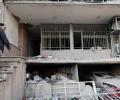
Trump said he is unwilling to make a deal with Tehran at this stage despite indications the country wants negotiations.

'There is no shortage of fuel whatsoever.' 'India is stock surplus as far as petrol and diesel are concerned.'

India emerged from the war militarily bruised and strategically altered. The United States, under the guise of friendship, had succeeded in achieving what open alignment never could: The psychological and political repositioning of India within the Cold War order, points out Dr Kumar.
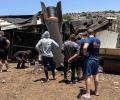
National Conference President Farooq Abdullah has voiced his concern over the escalating violence in West Asia, urging all parties to prioritise dialogue and diplomacy to de-escalate tensions and protect civilian lives.

Tensions escalate at the UN Security Council as the US and Israel defend their military actions against Iran, while Iran condemns the strikes as war crimes, raising fears of a wider Middle East conflict.

Russian President Vladimir Putin, in a phone call this past week with United States President Donald Trump, demanded that Kyiv surrender full control of Donetsk, a strategically vital region in eastern Ukraine, as a condition for ending the war, said two senior officials familiar with the conversation, the Washington Post reported.

'If this region destabilises, then we are not far away. This region should not destabilise.'

Congress leader Rahul Gandhi has criticised Prime Minister Narendra Modi's foreign policy and his remarks referencing the COVID-19 pandemic in relation to the West Asia situation.

Chinese foreign ministry spokesperson Mao Ning said that the country believes that dialogue and negotiation are the only viable solutions to resolving disputes and that the continued escalation of the conflict serves no one's interests.

Union Minister Pralhad Joshi stated that the Indian government is actively working to ensure the safe return of Indian citizens stranded in the Middle East due to the ongoing conflict, emphasizing the volatile situation and the government's commitment to their safety.

Aseem Mahajan, Additional Secretary (Gulf) in the Ministry of External Affairs, on Saturday informed that five Indians have been killed and one is missing due to the ongoing conflict in West Asia. He added that Indian missions remain open round the clock and are constantly working to provide assistance.

Iran's Islamic Revolutionary Guard Corps (IRGC) claims control of the Strait of Hormuz and reports striking a US destroyer, escalating tensions in the Middle East following retaliatory strikes between Iran, the US, and Israel.

In a region increasingly shaped by competition and coercion, such collaboration strengthens security without confrontation, builds capacity without dependency and promotes order without domination, points out Dr Kumar.

Amidst ongoing conflict, Iranian President Masoud Pezeshkian signals a potential de-escalation by apologising to neighbouring countries while firmly rejecting US President Donald Trump's demand for unconditional surrender.

Asian Development Bank (ADB) on Friday warned that India's limited crude oil reserves of about 100 million barrels - sufficient for only 40-45 days of consumption - leave the country particularly vulnerable to supply disruptions through the Strait of Hormuz amid the ongoing war in West Asia.

The Pakistan Cricket Board (PCB) has announced a 15-member squad, including six uncapped players, for the upcoming three-match ODI series against Bangladesh.

The Chinese People's Liberation Army's eastern theatre command continued its military drills around Taiwan for a second consecutive day on December 30, involving naval, air and ground forces in what it described as a demonstration of joint operational and blockade capabilities.
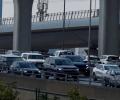
The Indian Embassy in Riyadh has confirmed that an Indian national was injured but no fatalities occurred in a projectile incident in Saudi Arabia. The injured individual is receiving treatment at a government hospital.
 © 2026 Rediff.com - Advertise with us - Disclaimer - Privacy Policy - Sitemap - Feedback - About us - Terms of use - Grievances